Polymarket invite codes, what actually exists
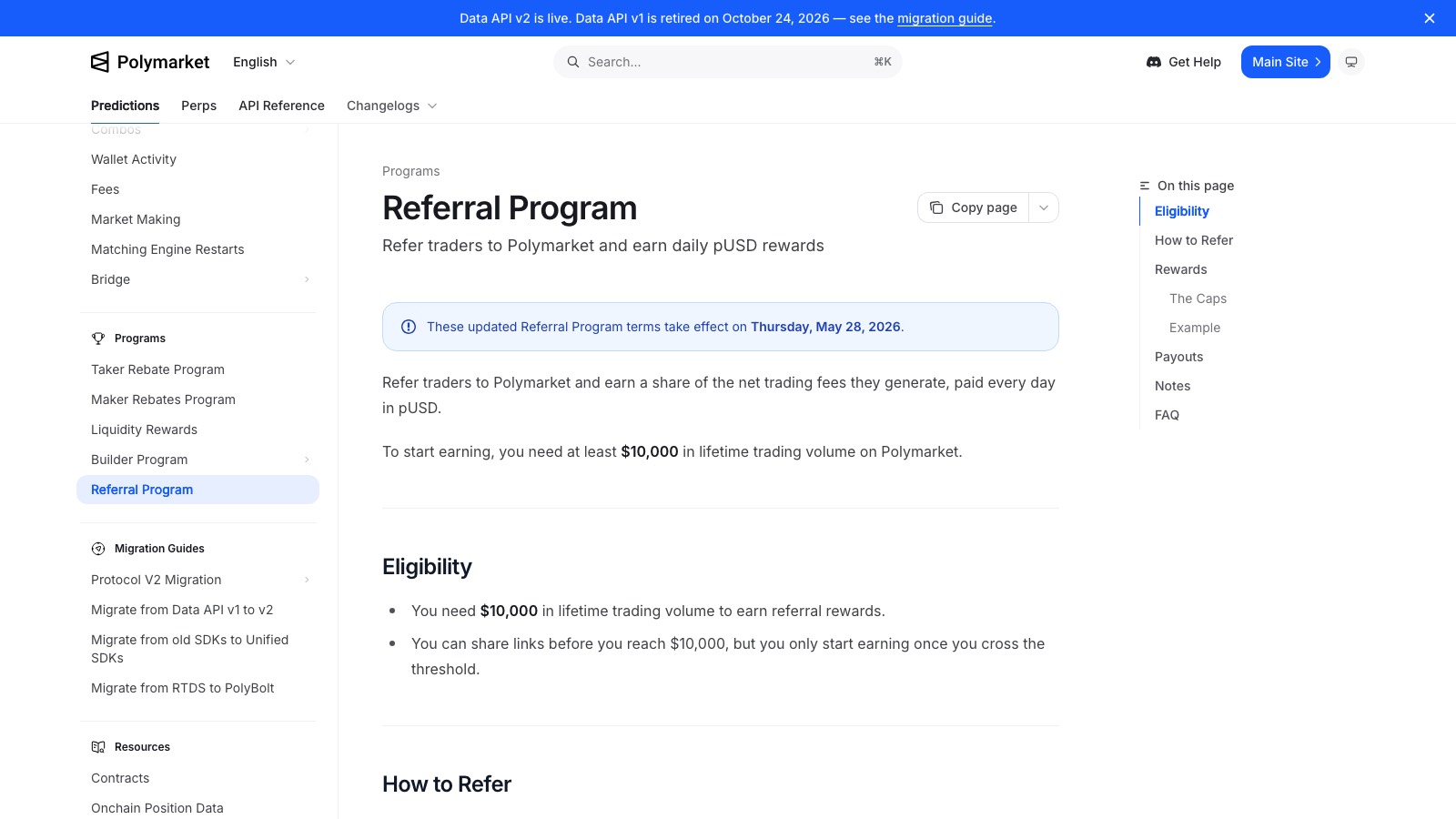
There is no invite code for Polymarket's prediction markets. Nothing to paste at sign-up, no bonus for entering one, and any site offering you a "code" for trading event markets is describing something that does not exist. What Polymarket runs there is a referral programme built on share links, and its terms, updated 28 May 2026, are considerably stricter than the search results suggest. One exception worth naming, because it is the likely source of the confusion: Polymarket Perps is a separate product and it does use invite codes. Its API returns an invite code, a parent referral code and a fee share rate per account. If you arrived here after seeing a "Polymarket invite code" elsewhere, it was almost certainly a Perps code, and it does nothing on the prediction markets.
The short answer
- No codes. You refer people with a share link from any market or profile page, not with a string typed into a box.
- You cannot earn until you have traded $10,000. That is lifetime volume, on your own account, before a single cent of referral reward is payable.
- You earn 10% of net fees from people you refer directly, 5% from people they refer.
- It ends fast. Rewards on any referral stop when they reach Platinum tier or after 30 days, whichever comes first.
- Paid daily, at midnight UTC, in pUSD.
The $10,000 threshold is the part nobody mentions
You may share referral links from day one. You will not be paid for them until your own lifetime trading volume reaches $10,000.
That single condition disqualifies most people searching for this. If you are looking for an invite code because you are about to open an account, the referral programme is not available to you yet, and will not be until you have put $10,000 of volume through the exchange.
What you actually earn
| Referral type | Share of net trading fees |
|---|---|
| Direct, someone you referred | 10% |
| Indirect, someone your referral referred | 5% |
The word doing the work is net. You earn a share of what Polymarket keeps after the referred trader's own rebate tier is paid out. The better your referral's rebate tier, the more of their fees flow back to them and the less there is for you.
And because the reward is a share of fees, it is worth nothing on markets that charge no fee. Geopolitics and world-events markets are fee-free on Polymarket, so referral activity there earns you nothing at all, see Polymarket fees for which categories charge and which do not.
Two caps, and the first one to hit wins
Rewards on a given referral end at whichever of these comes first:
- They reach Platinum tier. Rewards run from their first trade through every tier up to and including Gold. At Platinum they stop.
- 30 days pass since they signed up.
Both caps bite hardest in the same case: a referral who trades heavily. They earn you the most per day and reach Platinum soonest, which ends the reward early. The programme pays best on moderately active traders, not on the whale you were hoping to introduce.
A separate 30-day window applies at the other end: someone must sign up within 30 days of clicking your link to be attributed to you at all.
What this is worth in practice
The reward is a percentage of a fee that is itself small. Polymarket's taker fee peaks at 50¢ and is $1.25 per 100 shares on sports at 0.05, so a direct referral trading 100 shares at 50¢ generates roughly ten cents of gross fee, of which you receive 10% of whatever is left after their rebate.
To make this meaningful you need referrals who trade in size, quickly, and then stop before Platinum. That is a narrow target, and it is worth knowing before you build an audience around it.
Terms change without notice
Polymarket states plainly that reward rates, windows, tier caps "and any other terms are set by Polymarket and can change at any time without notice", and reserves the right to disqualify referrals and claw back rewards for self-referrals, linked accounts and inauthentic trading.
This page is re-checked against the programme documentation on a 30-day cycle, because promotional terms move faster than fee schedules. The date below is when its facts were last confirmed.


